
Commercial Coffee Machine Water Filters: A Practical Guide
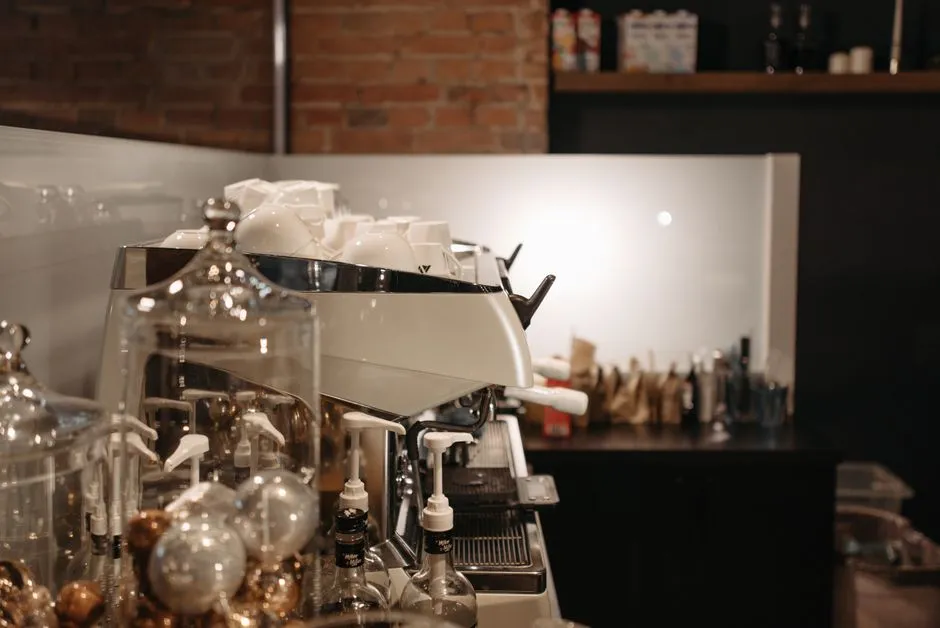
Photo by Pavel Danilyuk on Pexels
A commercial coffee machine water filter is not an optional extra, even though it is often sold like one. It is the cheapest part of the whole setup and the one doing the most to keep the machine alive, and running without a working one is the quickest way to kill a piece of kit worth thousands.
If you have ever descaled a kettle you have already met the problem. That hard white crust is limescale, left behind by hard water every time it heats. A commercial machine heats far more water far more often, so the same thing happens faster and deeper inside the machine, in the boiler and the valves where you cannot see it or reach it. Scale there does not just cost you flavour, it blocks the machine up and kills it.
We fit a filter to every machine we supply and have spent nearly two decades dealing with what scale does to the ones that go without. This is the full picture: how scale forms, what it does, how much your part of the country changes the risk, how often to change the filter, and the honest limits of what a filter can and cannot do. If you are still choosing, every machine in our commercial coffee machine range comes with a filter fitted as standard.
What a water filter does, and why it is not optional
A water filter does two jobs. It protects the machine from scale, which is the big one, and it cleans up the water behind the coffee.
On the machine side, it treats the water before it reaches the boiler so that far less scale ever gets the chance to form. On the cup side, it strips out the chlorine and the other off tastes that come with a mains supply. Water is almost all of what people are drinking, so cleaner water makes for a noticeably cleaner, better tasting coffee. The British Coffee Association is a good read if you want to go deeper on what goes into a quality cup.
This is the one part of a coffee machine that is genuinely not a choice. With most things we will happily tell you when an option is more than your business needs. Not this. Every manufacturer expects a filter to be fitted, and running a machine without one voids the warranty, so we include and fit one as standard on every machine rather than selling it as an upgrade afterwards. The rest of this guide is about understanding it, not deciding on it.

How scale forms, and what it does to a machine
Scale comes from the machine doing its job. A boiler heats water, and through the day it heats up and cools down over and over. Every one of those cycles pulls the minerals in hard water, mainly calcium and magnesium, out of the water and leaves them behind as a hard chalky crust on the metal. The more a machine heats and cools, the more scale it lays down.
Left alone, that crust coats the boiler and furs up the valves and the narrow internal pipework. The machine has to work harder to heat through it, it loses temperature stability, and eventually the scale blocks a valve or a line and the machine simply stops. Scale is one of the most common reasons a commercial machine dies years before it should.
That is the part that costs real money. A well looked after machine lasts around 5 years, and a good traditional machine considerably longer. Scale is the quickest way to cut that short, and because the damage builds up out of sight, the first sign is often the machine failing rather than a warning. A filter that costs very little is what stands between hard water and a boiler worth replacing.

Where you are changes the risk
How fast scale forms depends a lot on where the machine is, and the UK varies enormously. The hardest water runs in a broad band through London, the south east, the east of England down through Lincolnshire and East Anglia, and much of the Midlands, all chalk and limestone country. The softest is in Scotland, Wales, the north west and the south west, where Devon and Cornwall sit on granite and have some of the softest water in the country. So the same machine that needs close attention in London or Birmingham will scale up far more slowly in Glasgow, Manchester or Cornwall.
It is worth knowing where you fall, because it sets how hard your water is working against the machine. You can see the official water hardness map for England and Wales from the Drinking Water Inspectorate, the body that regulates UK drinking water, or check the exact figure for your postcode with your water supplier.
What it does not change is whether you need a filter. Even in a soft water area scale still forms, just more slowly, so the filter is not optional anywhere. What your area changes is how often that filter needs swapping, which brings us to the next part.
How often to change the filter
As a working guide, a water filter wants changing every 6 to 12 months. Where you land in that range comes down to two things: how hard your water is, and how hard the machine is being used. A busy site in a hard water area is at the 6 month end. A quieter machine in a soft water area can comfortably go closer to 12.
The catch is that nothing visibly changes when a filter is spent. The machine keeps pouring exactly as it did, so it is the easiest job in the world to forget, and a forgotten filter is doing nothing at all. A spent filter is no better than no filter, and scale quietly starts getting through again.
This is the part businesses miss most, so it is the part we take off your hands. We track when each filter is due against the site and the machine and change it as part of looking after the machine, rather than leaving it to someone to remember.
A filter reduces scale, it cannot stop all of it
Here is the honest part. No filter removes every mineral, and nothing stops scale completely. A filter reduces it, sometimes dramatically, but over a working life some always gets through. What keeps a machine alive is not one perfect filter, it is looking after the machine: the filter, the daily clean, the descaling and the yearly service together.
Descaling is the other half of it, and it works differently to a filter. The filter keeps scale out, descaling removes the scale that has built up. The two are not interchangeable, you need both. There is a wrinkle worth knowing on bean to cup and instant machines though: a lot of their parts are integrated, which makes them harder to descale thoroughly than a traditional machine where more is accessible. The machines we supply use newer technology that manages scale better and makes the descale cycles more effective, but no machine escapes the basic truth that the less scale gets in, the longer it lasts.
In our experience across nearly two decades, around 8 out of 10 of the faults we are called to come down to cleaning rather than a broken part, and scale sits right alongside it as the other quiet killer. Stay on top of the filter, the cleaning and the descaling and you remove most of the reasons a machine ever lets you down. Our complete guide to commercial coffee machines covers where the descaling routine fits alongside everything else.

If you have fought scale before, look for a drainable boiler
If you have run a coffee machine before and dealt with scale, there is one feature worth seeking out on the next one: a boiler you can drain. Most of our bean to cup and instant machines let you drain the boiler down, which matters more than it sounds, especially if the machine is ever switched off for a stretch.
The clearest lesson in that came in 2020. When lockdown hit, businesses closed almost overnight, and very few people thought to drain their coffee machine boilers, or had any reason to expect they would need to. So the water just sat there. Months of still water sitting against boiler metal, and when sites finally reopened a lot of those machines had taken real scale and corrosion damage from water that had been left standing. A drainable boiler turns that from a disaster into a five minute job before you lock up.
None of this is complicated to stay on top of, it just needs doing. Get the filter right for your water and your volume, keep up the cleaning and descaling, and drain the boiler if the machine is going to sit unused. Do that and a commercial machine pays you back for years. If you would rather not have to think about any of it, looking after the machine is exactly what we are here for, so get in touch and we will handle the lot.
Common questions
Do commercial coffee machines need a water filter?
How often should I change a coffee machine water filter?
Is the water harder in some parts of the UK?
Can a water filter stop scale completely?
Does a water filter improve the coffee?
What happens if I do not use a water filter?
Is a water filter the same as descaling?
Do you supply and fit the water filter?
Family run since 2009. Nearly two decades supplying commercial coffee machines, our own range of coffee and ongoing technical service to businesses across the UK.
Thinking about a commercial coffee machine for your business?
We can talk through what fits before you spend anything. Family run since 2009. Free written quote, same day reply.