
Commercial Coffee Machines: How to Pick the Right One for Your Business
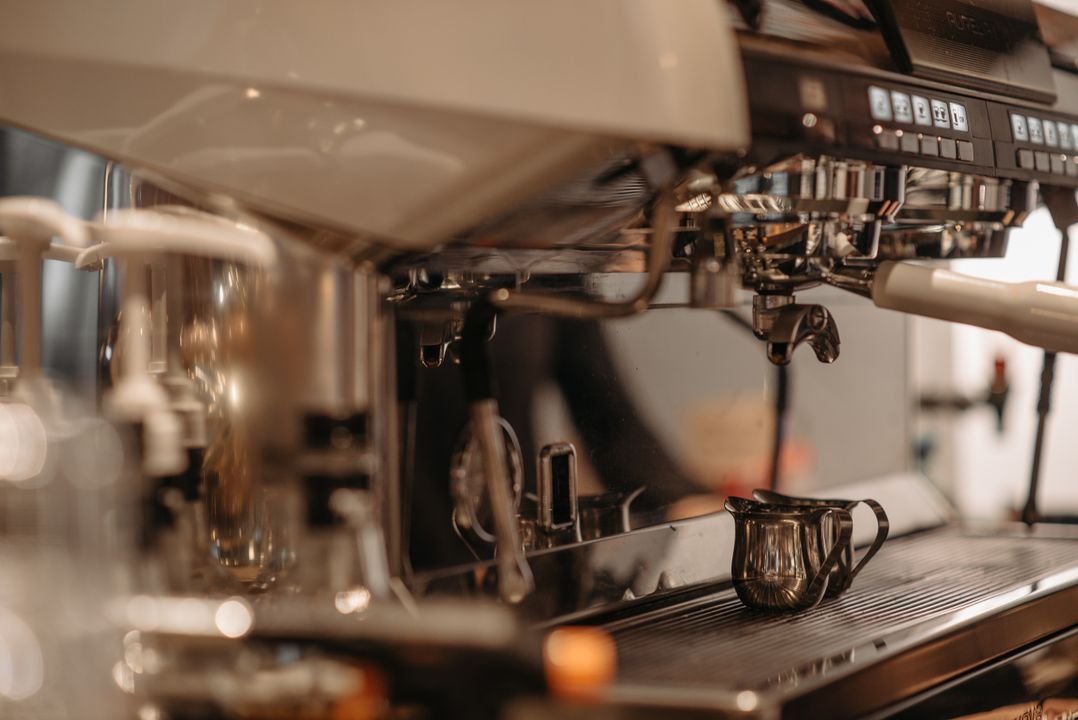
Photo by Pavel Danilyuk on Pexels
A commercial coffee machine is built to handle volume, every day, for years. There are three main types worth knowing about: bean to cup, traditional espresso and instant. Picking the right one comes down to how much coffee you actually serve, who is operating the machine and what role coffee plays in the business.
Most businesses choose theirs in five minutes from a website. The machine then gets used by everyone in the building, several times a day, for the next five years. It is worth a bit more thought than that. The right answer is usually not the one with the most impressive product page.
This guide covers what we have learned from nearly two decades of supplying commercial coffee machines to UK businesses. The three types and where each one fits, what to check before you buy, what the prices actually look like, and how to avoid the most common mistakes. No upselling, no jargon.
What a commercial coffee machine actually is
A commercial coffee machine is built for volume and continuous use. Plumbed in. Internals made of components that can be serviced rather than replaced. Larger boiler. Wider portafilter. A grinder that handles thousands of doses a week without complaining.
Domestic machines look similar from the outside but they are not designed for that workload. Put a domestic machine in a busy office and it will give up inside twelve months. That is the line between the two categories.
For UK businesses there are three main types of commercial coffee machine worth knowing about. They are not interchangeable. Each one is right for a different setup.
The three main types and where each one fits
Most commercial coffee machines fall into one of three groups. Bean to cup, traditional espresso, and instant. Each one solves a different problem.
Bean to cup
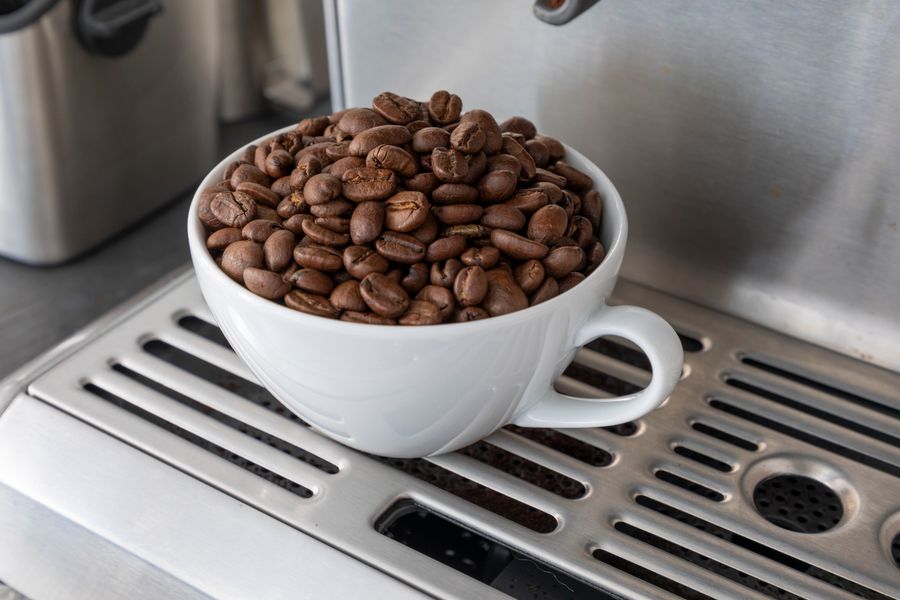
A bean to cup machine grinds whole beans fresh for every drink. One touch. The machine doses, tamps, extracts the shot and steams the milk if asked. Most modern bean to cup machines also offer flavoured drinks, decaf and hot chocolate on the same panel.
This is the default choice for offices, hotels and self service environments because there is no training overhead. A new starter can make a flat white on their first morning without anyone showing them how. Most of the bean to cup machines we supply end up in workplaces for exactly this reason.
Worth knowing: bean to cup machines have more moving parts than any other type. They need cleaning daily without exception. A business that will not commit to that routine will have problems. It is not a question of machine quality. It is a question of fit.
Traditional espresso
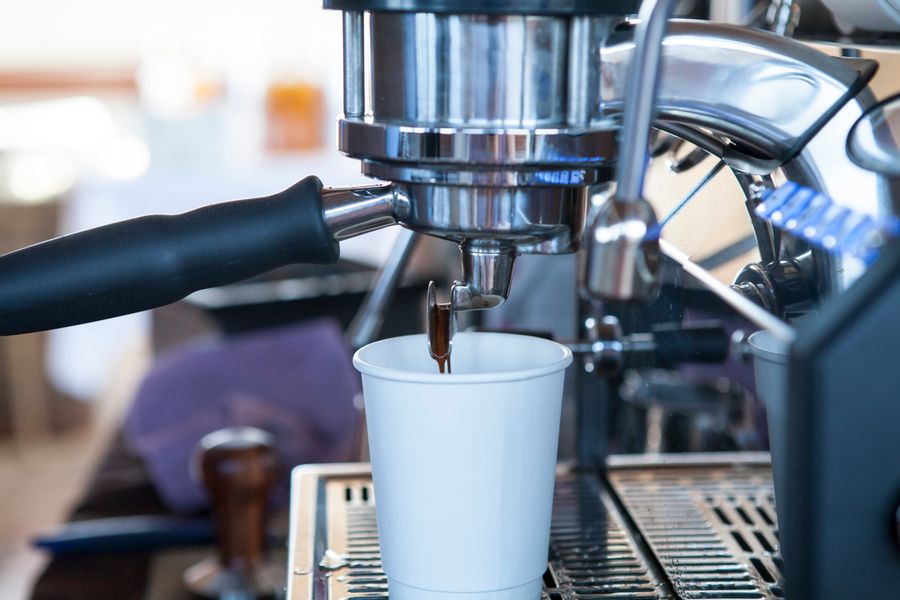
A traditional espresso machine is what you see behind the bar in a coffee shop. Two or three group heads, manual portafilters, a separate grinder. The barista doses the coffee, tamps it, locks it in and pulls the shot.
It produces the best espresso when operated by someone who knows what they are doing. It also produces some of the worst espresso when operated by someone who does not. The capital outlay is higher than bean to cup and there is a real training requirement, but the ceiling on quality is also higher.
In practice, traditional machines are not as complicated to learn as they look. Anyone can be brought up to a competent standard with a basic introduction. The Specialty Coffee Association publishes the industry standard for barista training if a business wants to formalise it. The barrier is lower than people assume. For cafes, restaurants and any business where coffee is part of the customer experience, this is usually the right category.
Instant
Instant coffee machines dispense hot drinks made from freeze dried coffee or instant granules. Speed and simplicity are the priority. Catering vans, contractor sites, factories, large staff break rooms where the cup needs to come out fast.
The word instant carries baggage. Most people associate it with a jar of cheap coffee in a break room. A modern commercial instant machine running a quality freeze dried Arabica is a different product entirely. The cup quality is good. The maintenance burden is much lower than bean to cup.
For most businesses where coffee is a workplace benefit rather than a commercial product, an instant machine is the easiest to run, the cheapest to maintain and produces a drink staff are happy with. We would say it deserves more serious consideration than it usually gets.
How to pick the right type for your business
Three questions usually settle the answer.
- How much coffee will you actually serve in a day. Under 30 cups, almost any setup will cope. Over 100, the grinder size, boiler capacity and water connection start to matter.
- Will the people using it be trained. If yes, traditional espresso is on the table. If not, bean to cup or instant.
- What is the wider environment for. An office reception probably wants bean to cup. A contractor site wants instant. A hotel could go either way. A coffee shop needs traditional espresso. There are exceptions to all of these, but those are the defaults.

Everyone asks for bean to cup. Not everyone should have one.
Bean to cup machines are popular for good reason. Fresh ground coffee at the touch of a button is a genuinely good product. But in our experience, a significant number of businesses come in asking for bean to cup and leave with something else once they understand the full picture.
We had a business with 40 members of staff who came to us for a bean to cup machine. They had budget, they wanted the prestige, they ticked the box of wanting fresh ground. We quoted properly. They came in, tried both bean to cup and instant side by side, and had a proper conversation about what they actually needed.
The instant machine cost around 12p per drink to run. The bean to cup around 26p. Across 40 staff drinking an average of two coffees a day, the difference adds up quickly. The instant machine also held more coffee in its canister, did not require cleaning tablets and produced drinks noticeably hotter because there is no extraction step that loses heat.
They left with the instant machine. They did not feel like they had compromised. They felt like they had made a good decision. For their business, it was the right answer.
The point is not that instant is always the answer. It is that the answer is rarely obvious from a product page. The right machine is the one that fits the actual setup, not the one that sounds best when you describe it to colleagues. If you are weighing up the same decision, it is worth a conversation before you commit.
Practical things worth checking before you buy
Five things tend to get missed during the buying conversation. Sort them out up front and you avoid most of the common service calls.
- Water supply. Most commercial coffee machines are plumbed in. Mains water with a filter is standard. A 13 amp socket nearby usually covers the power.
- Water hardness. UK water varies significantly depending on location. The Drinking Water Inspectorate publishes regional hardness data if you want to check your area. A commercial coffee machine water filter is not optional in a hard water area. It is the difference between a machine that lasts five years and one that scales up inside twelve months.
- Footprint. Measure the counter and add 10cm either side for service access. Bean to cup machines need clearance to refill the bean hopper. Traditional espresso machines need workspace either side of the group heads.
- Milk solution. Fresh milk produces noticeably better drinks. It needs a small fridge underneath and daily cleaning without exception. Powdered milk machines are simpler to run and suit self service environments where nobody is topping up a fridge twice a day. Neither is wrong. They suit different setups.
- Service access. Think about where an engineer will stand to open the machine when something does go wrong. A machine pushed against a wall on three sides becomes a service problem at some point.
Whether to buy, lease or rent
Most commercial coffee machines in the UK are sold outright, but leasing is common and rental is offered by some suppliers. Each route has trade offs worth understanding.
Buying outright means owning the machine from day one. No interest, no contract, the asset is yours. For most businesses with the cash flow to do it, this works out cheapest over five years.
Leasing spreads the cost over a fixed period, typically three to five years, instead of paying for the machine up front. Specialist coffee equipment finance companies tend to offer better rates than general asset finance because they understand the equipment. Leasing makes sense when cash flow matters more than total cost. We can talk through the figures for a specific machine when you get in touch.
Renting is a different arrangement entirely, and we would say it is rarely the right answer. Rental contracts in this industry typically involve refurbished equipment, inflated monthly costs and committed coffee volume agreements. You pay over the odds for equipment you never own, and if your volume commitments are missed there are often penalties. We do not offer rentals and we do not recommend them.

What ongoing supply and servicing should look like
A commercial coffee machine is only as good as what goes in it. Ongoing supply usually covers four areas.
- Beans, freeze dried coffee or other ingredients depending on machine type
- Cups, lids, stirrers and any disposables
- Cleaning products and water filter replacements
- Engineer call outs for breakdowns and routine servicing
Cleaning is the thing that decides how long the machine lasts
In our experience, across nearly two decades of servicing commercial coffee machines, eight out of ten faults come down to cleaning. Not a faulty part. Not a manufacturing defect. A machine that has not been cleaned properly or consistently enough.
The standard first call we get is a customer saying the machine has stopped working. The first question we ask is always: what is the error code. The answer is usually that there is not one. Good, we tell them. That means it is nothing mechanical. From there it is a walk through over the phone. Have they cleaned it recently. Can they check the pipes. Is the mixing bowl clean. Is the hopper jammed. In a significant number of cases the machine is back working before an engineer visit is needed.
The machines are not difficult to clean. The cleaning process is straightforward. The problem is that it is easy to skip, and the consequences build up slowly until something stops working. A machine that gets cleaned properly and serviced once a year will outlast a poorly cleaned machine with quarterly engineer visits.
Common questions
What is the difference between a commercial coffee machine and a domestic one?
How much does a commercial coffee machine cost?
Can I lease a commercial coffee machine instead of buying it outright?
Do bean to cup machines use fresh milk or powdered milk?
How often should a commercial coffee machine be serviced?
How long should a commercial coffee machine last?
Do you supply the coffee and consumables as well as the machine?
Family run since 2009. Nearly two decades supplying commercial coffee machines, our own range of coffee and ongoing technical service to businesses across the UK.
Thinking about a commercial coffee machine for your business?
We can talk through what fits before you spend anything. Family run since 2009. Free written quote, same day reply.