
Coffee Machines for the Office: How to Choose the Right One

Photo by Cup of Couple on Pexels
Office coffee has earned its reputation. A jar of instant nobody chose, sitting next to a kettle that takes four minutes to boil, with a teaspoon welded to the worktop by something nobody wants to identify. Most coffee machines for the office are bought to put an end to exactly that. The good news is that the machine which fixes it does not have to be expensive or complicated. The bad news is that the most popular choice is not always the right one for your office.
The right machine for an office is not the one with the longest drinks menu. It is the one that matches how many people you have, how much they actually drink, who is going to clean it, and what you are willing to spend per cup. Get those four things straight and the choice almost makes itself.
This guide covers the three types that suit an office, how to pick between them, what they cost to buy and to run, and the one job that quietly decides how long the machine lasts. It is the same advice we give the businesses that ring us about commercial coffee machines every week. If you would rather just see the options, here are the office coffee machines we supply.
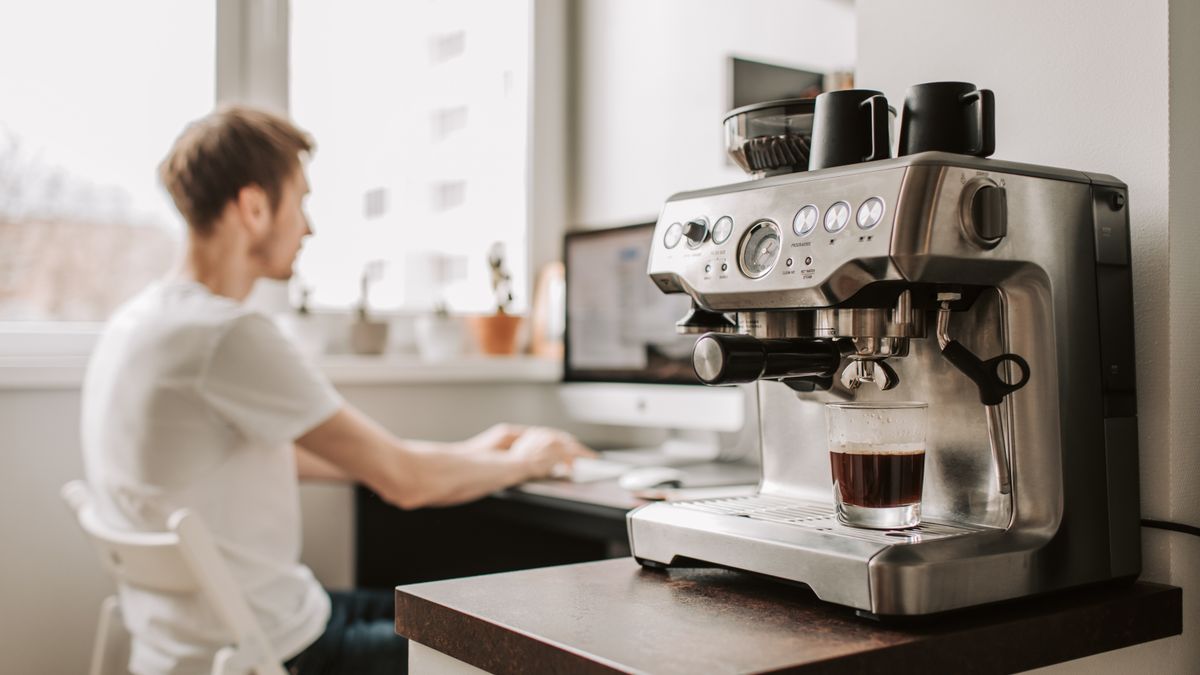
The three types of office coffee machine, and what each one is for
Almost every office coffee machine falls into one of three types: instant, bean to cup, or traditional espresso. They are not interchangeable. Each one suits a different size of team and a different appetite for fuss.
An instant machine mixes good quality instant coffee with hot water at the push of a button. There is nothing to grind and very little to clean, it holds a lot of coffee so it needs refilling less often, and the drinks come out properly hot. For a busy office where people want a quick cup between meetings, an instant coffee machine is often the most sensible thing in the building.
A bean to cup machine grinds fresh beans for every drink and builds the whole thing at the touch of a button, milk included. It is the closest an office gets to a coffee shop cup without anyone learning to use a machine. A new starter can make a flat white on their first morning. Most of the bean to cup machines we supply end up in offices for exactly that reason. The trade off is maintenance, which we come back to.
A traditional espresso machine is the one you see behind the counter in a cafe, with a portafilter and a steam wand. It makes the best coffee of the three in the right hands, and while barista training is not as hard as people assume, in most offices nobody has the time or the inclination to operate one. That is why traditional machines are usually the wrong fit for a workplace and the right fit for a cafe. If coffee is something your business sells rather than something it provides, that changes, and our guide to commercial coffee machines covers it in more detail.
How to choose the right one for your office
Start with the team, not the machine. How many people you have, how often they actually make a drink, and what they reach for in the morning tells you almost everything you need to know.
A small office of ten people drinks very differently from a floor of eighty. A compact instant machine or a single bean to cup unit covers a small team comfortably. A larger headcount, or a site where everyone arrives within the same half hour, needs a machine with the capacity and speed to handle a queue, or more than one machine.
- How many people will use it, and how many drinks a day that realistically means. Two a head is a fair starting estimate.
- Who cleans it. A machine with nobody assigned to clean it is a machine that will break. This decides more than people think.
- Fresh milk or powdered. Fresh milk tastes better and needs a fridge and daily cleaning. Powdered milk is simpler and suits a setup where nobody is topping up a fridge twice a day.
- What you are willing to spend per cup. Free staff coffee is a running cost, and the cost per drink adds up quickly across a full office.
Bean to cup is not always the answer
Everyone asks for bean to cup. Not everyone should have one. It is the machine people picture when they imagine upgrading the office coffee, and for a lot of offices it is the right call. But the word instant carries baggage it no longer deserves. Modern commercial instant machines make a genuinely good cup, and they are the easiest, cheapest and most reliable machines to run.
A while ago a business came to us set on a bean to cup machine. We quoted them, they came in, tried both, and had a proper conversation about what they actually needed. They left with an instant machine. Not because it was cheaper, though it was, but because once they saw the full picture it was the right answer. It was simpler to clean, the canisters held more so it needed refilling less often, and the drinks came out hotter.
The detail that settled it was cost. They gave their staff coffee free as a workplace perk, and they had 40 people, most of them having two cups a day. A cappuccino from the instant machine cost them around 12p. From the bean to cup machine it was around 26p. Across 40 people, twice a day, that gap is real money over a year, and the instant cup was still excellent. They did not feel like they had compromised. They felt like they had made a good decision.
That does not mean instant is always right. If coffee variety is part of how you look after staff or impress visitors, bean to cup earns its place. The point is to choose on your actual usage and budget, not on which machine sounds the most impressive. We would rather talk you out of a machine you do not need than sell you one you will not use.

What an office coffee machine actually costs
Here are the real numbers, supplied and installed. An instant machine runs from £1,750 to £3,500. A bean to cup machine runs from £3,000 to £6,000. Traditional espresso machines start around £3,000 and climb to £15,000, though as covered, those rarely belong in an office in the first place.
If you would rather spread the cost, lease finance through a specialist coffee equipment finance company lets you pay over a fixed term instead of all at once. Buying outright is the better long term option when cash flow allows, because you own the machine from day one and pay no interest, but leasing keeps the upfront figure off the table. We can run through the numbers when you get in touch.
Then there is the cost per cup, which is the number most offices forget. The machine is a one off. The coffee, milk and cleaning products are every week for years. This is where the choice of machine and the choice of coffee matter more than the sticker price. A few pence a cup, across a full office, several times a day, is the figure that actually shows up on the spreadsheet.
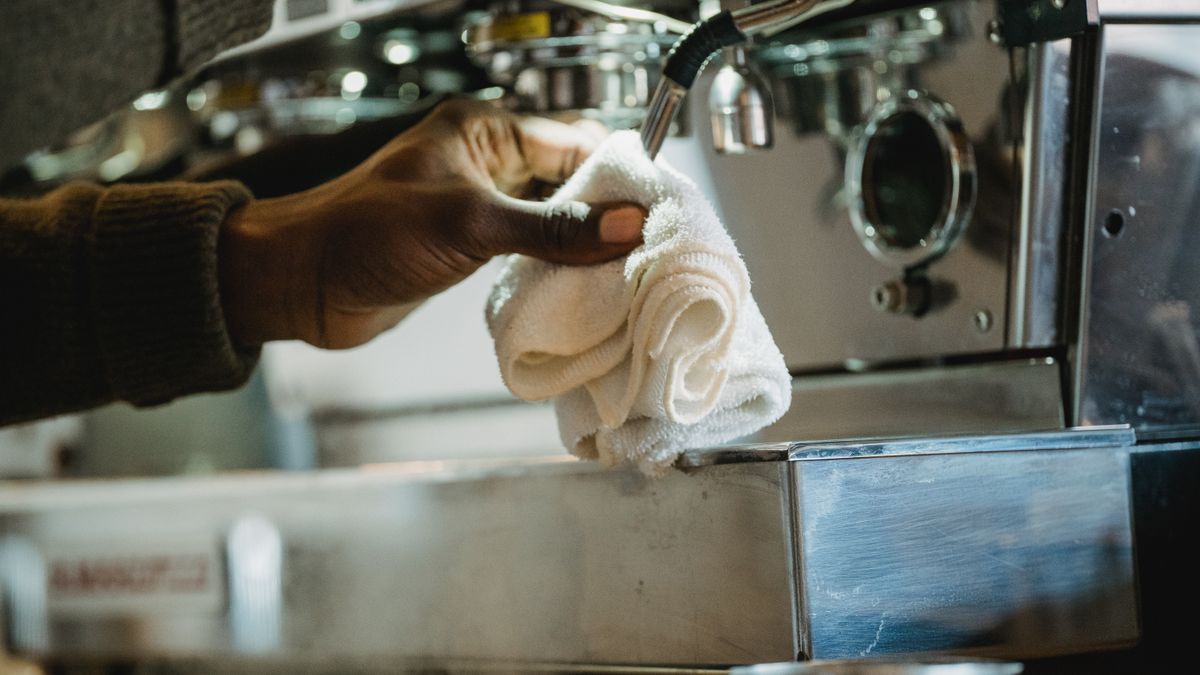
The one job that decides how long it lasts
Whatever machine you choose, one thing decides whether it reaches its fifth birthday or dies in its second. Cleaning. In our experience across nearly two decades of servicing machines, eight out of ten faults come down to cleaning, not a faulty part and not a manufacturing defect. A machine that has not been cleaned properly will eventually stop working, and the machine usually gets the blame.
Bean to cup machines, and any machine that handles fresh milk, need cleaning every day without exception. Milk residue builds up fast and causes both hygiene and mechanical problems. Instant machines are far more forgiving, which is part of why they suit offices where no single person owns the cleaning routine. None of it is difficult. The process is straightforward. The problem is that it is easy to skip, and the consequences stack up slowly until something gives.
Water is the other quiet factor. Most of the UK sits in a hard water area, and limescale is hard on any machine with a boiler. A plumbed in machine with a proper water filter protects the internals and keeps the coffee tasting as it should. Filters need changing every six to twelve months depending on how hard your water is and how much you get through. It is a small running cost that prevents a large repair bill.
None of this should put you off. An office coffee machine that is matched to your team and cleaned properly is one of the cheapest things you can do for the working day. If you want to talk through what fits your office before you spend anything, that is the conversation we have with businesses every week.
Common questions
Which coffee machine is best for an office?
What is the best coffee machine for a small office?
What should you consider when choosing an office coffee machine?
How much does an office coffee machine cost?
Do office coffee machines need plumbing?
How often does an office coffee machine need cleaning?
Family run since 2009. Nearly two decades supplying commercial coffee machines, our own range of coffee and ongoing technical service to businesses across the UK.
Thinking about a commercial coffee machine for your business?
We can talk through what fits before you spend anything. Family run since 2009. Free written quote, same day reply.